|
|
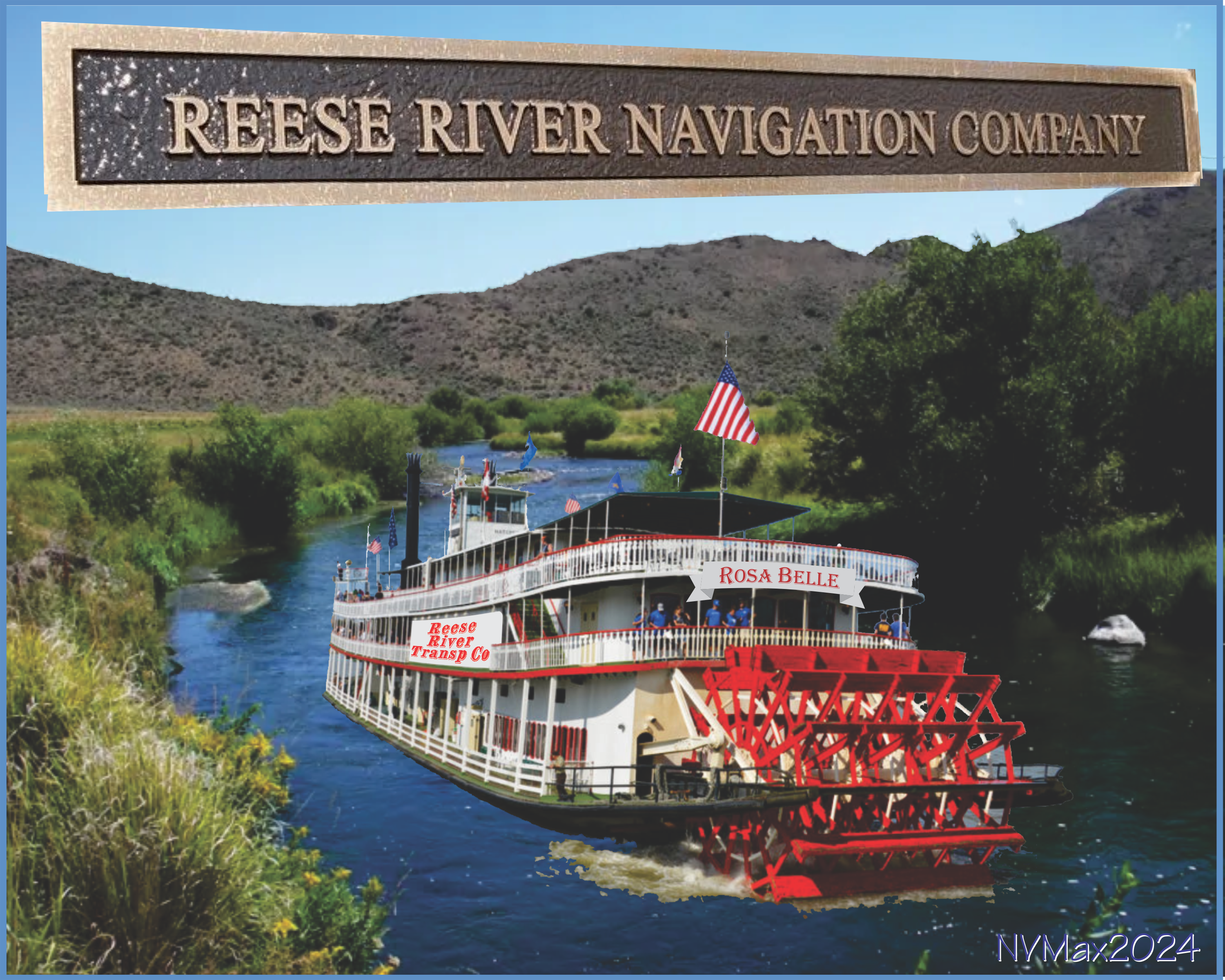
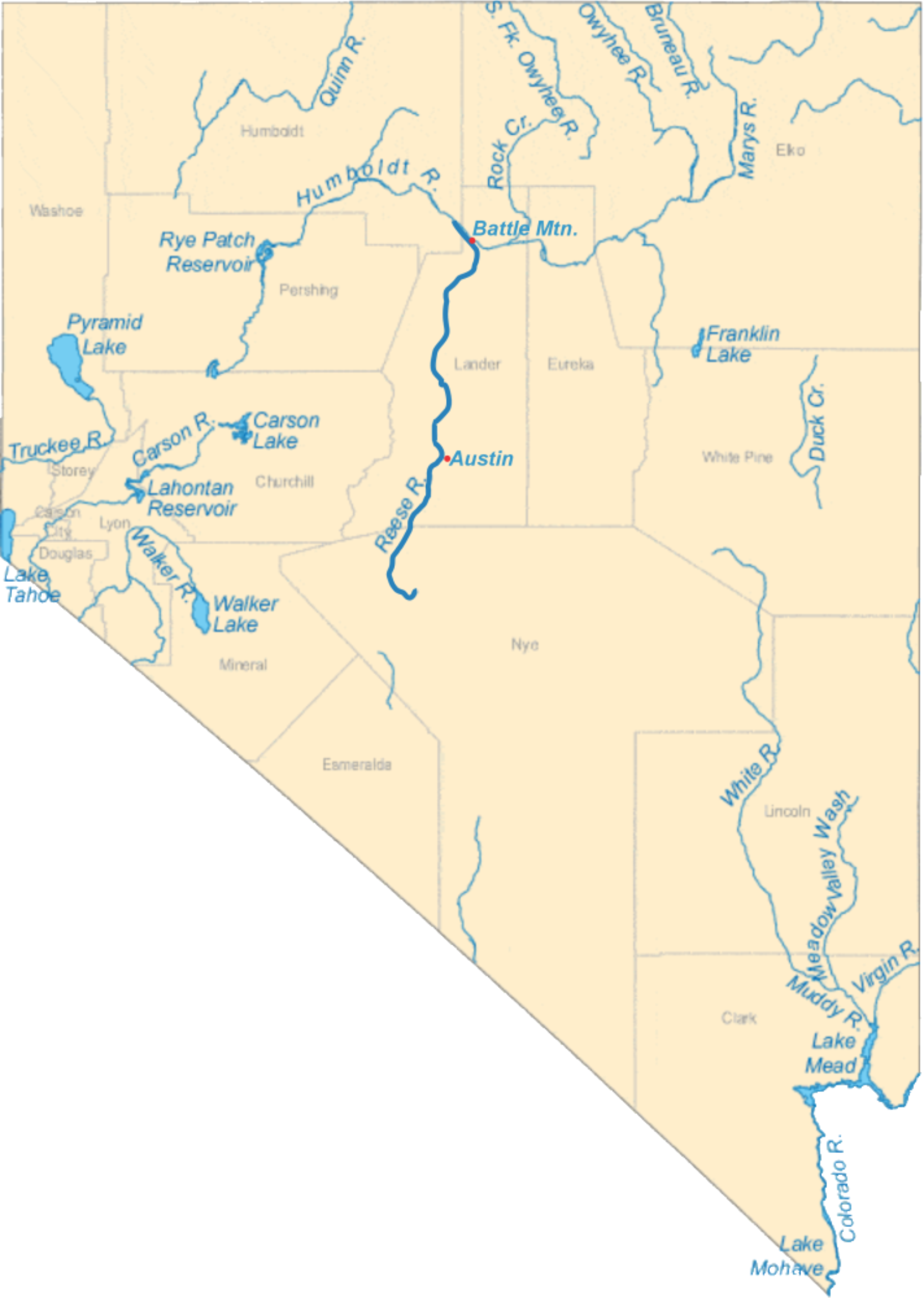
The Reese River: Although the Reese River stretches north over a 100 miles from the Toiyabe Range to Battle Mountain, it has been described by the writer and historian Phillip I. Earl as "barely ankle deep at flood tide and even less spectacular during the dry season, it could usually be forded by a wagon going full tilt with nary a jar to the passengers." The Reese River Navigation Company: In 1860, a group of "businessmen" formed the Reese River Navigation Company. The company sent ads and posters back East that showed large steamers on the river towing ore barges up to Battle Mountain. Although nobody knows how the stock was sold, gullible Easterners hoped to cash in on the potential millions that Nevada had to offer. The company's stock sold well until a group of investors came to Lander County to look at the budding enterprise. When word of the great hoax got back to investors, the "businessmen" closed the company and vanished into the Nevada back country. The stock was known to still be selling in New York in 1916, and the Reese River Navigation Company has become one of the greatest hoaxes in Western history. It is believed that the "businessmen" mentioned were part of the Sazerac Lying Club. Origins of the Sazerac Lying Club (from the book The Sazerac Lying CLub by Fred H. Hart) "LYING, like other arts and sciences, keeps pace with our education, refinement, and culture, and is fast becoming familiarized to the American people. Though I have classed it with the arts and sciences, and although there is something artistic in the construction of a good lie, and notwithstanding that a good, square, solid lie is a scientific triumph, still, I am of the opinion that lying should more properly be considered as an accomplishment. "In the year 1873, I was employed in an editorial capacity on a small daily paper, the "REESE RIVER REVEILLE," published in the town of Austin, State of Nevada. This was a sort of general utility position, comprising all the branches of interior journalism, from writing an advertisment about a lost dog up to heavy dissertations on leading topics. But the main object was to get items of local news. "Austin is a small, interior mining town, ninety miles, by a rough road, fromt the Central Pacific Railroad, having its communication with the outer world carried on by means of mud-wagons, called by courtesy 'stages' and, it can readily be conceived, a quiet place, in which anything of a startling nature in the line of news seldom transpires." |
 |